

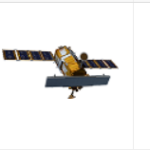
Geostationary and Earth Observation Satellite Programs
(In stock)
| Product Name | Geostationary and Earth Observation Satellite Programs |
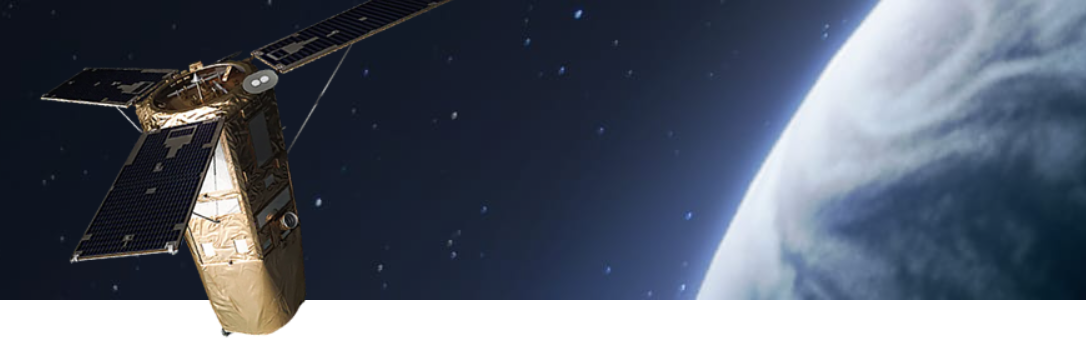
| Model Number | Geostationary Satellites: Cheollian-1, Cheollian-2A, Cheollian-2B/ Low Orbit Earth Observation Series: KOMPSAT-2, KOMPSAT-3A, KOMPSAT-5, KOMPSAT-7 (under development). |
| Brand | Korea Aerospace Research Institute (KARI), South Korea |
| Category | Space-based Earth Observation and Environmental Monitoring Satellites. |
| Country of Origin | South Korea |
| Material | Satellite Buses: Consist of locally designed structures, power subsystems, thermal control, onboard computers, and radiation-hardened electronics. Payloads: Cheollian Series: Equipped with meteorological, marine (GOCI), and environmental (GEMS) imagers. KOMPSAT Series: Carry optical and synthetic-aperture radar (SAR) imagers for high-resolution Earth observation. |
| Applications | Cheollian Satellites (Geostationary): Provide continuous meteorological, marine, and environmental monitoring—including pollution tracking, red tide detection, and atmospheric observation. KOMPSAT Series (Low Earth Orbit): Support land resource management, disaster response (e.g., floods, wildfires), urban planning, and security surveillance with day-night and all-weather capabilities. |
Securing satellite development technology to meet national public demand
The research and development of satellites in Korea began in 1994 when the General Science and Technology Council approved a multipurpose satellite (Arirang) development project. The multipurpose Arirang 1 was developed in 1999 to meet public demand for satellite images, with Arirang 2 developed under the initiative in Korea in 2006. Later, Arirang 3, Arirang 5, and Arirang 3A were developed in 2012, 2013, and 2015, respectively. Currently, KARI is developing Arirang 6, a high-precision radar satellite, and Arirang 7 and Arirang 7A as cutting-edge precision earth observation optical satellites.
Moreover, it developed Cheollian 1, Korea’s first geostationary orbit satellite capable of independent meteorological and ocean observation services. It also developed—and is currently operating—Cheollian 2A, which is capable of more precise meteorological observation than Cheollian 1, and Cheollian 2B, which is capable of marine observation as well as the world’s first atmospheric environmental observation from the geostationary orbit. In particular, Cheollian 2B is expected to help resolve conflicts between countries and social problems due to fine dust by identifying the migration path of air pollutants, such as fine dust, around the Korean Peninsula.
KARI has also developed small and scientific experimental satellites, such as Science and Technology 1 in 2003 and Naro Science and Science and Technology 3 in 2013. KARI has secured its independent satellite development technology by developing multipurpose satellites and geostationary orbit satellites. 500kg next-generation mid-size satellites 1 was launched in 2021 to transfer satellite technology to private industry with the aim of industrialising domestic satellites.
Looks like there are no reviews yet.