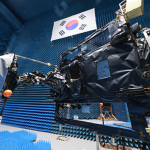
Korean Lunar Exploration Program (KLEP)
(In stock)
| Product Name | Korean Lunar Exploration Program (KLEP) |
| Model Number | Phase 1 — Danuri (KPLO) Orbiter; Phase 2 — Lunar Lander & Rover (2032 target) |
| Brand | Korea Aerospace Research Institute (KARI), South Korea |
| Category | National Lunar Exploration Program |
| Country of Origin | South Korea |
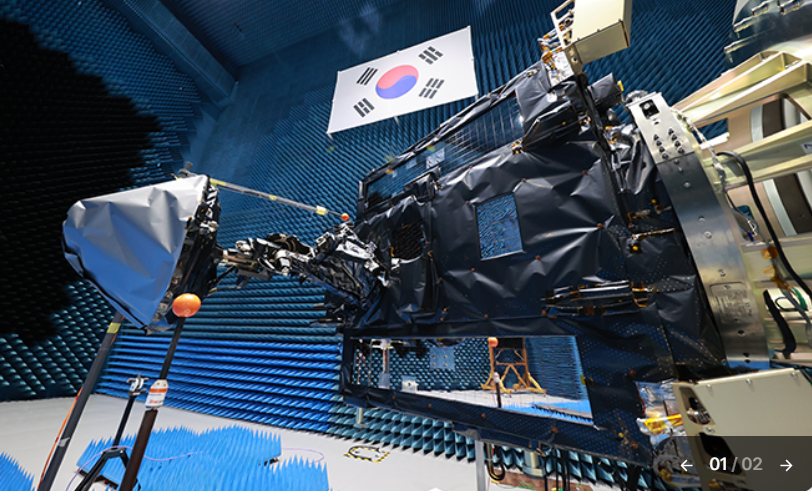
| Material | Mass: ~678 kg/ Dimensions: ~1.82 × 2.14 × 2.29 m/Equipped with six scientific payloads developed by Korean institutions and NASA/Utilized lightweight electronics (50 kg vs original 80 kg), and high-capacity 30 N thrusters; supported by a 35 m deep-space antenna for communication/ Launched August 5, 2022; entered lunar orbit December 26, 2022; mission extended to 2027/Phase 2 — Lunar Lander & Rover:Landed target: ~1.8 t class soft-landing platform with rover (20 kg)/Scheduled for launch by 2032 aboard the next-gen KSLV-III launch vehicle/Development budget: ~530 billion won over ~10 years (2024–2033). |
| Applications | Danuri Phase: Establishes Korea’s first lunar orbital mission, advancing technological capabilities in deep-space comms, navigation, lightweight spacecraft structure, and payload instrumentation. Lander Phase: Aims to validate autonomous lunar soft-landing and surface exploration technologies; a key step toward South Korea's role in the expanding lunar economy and space industrialization. |
A New Era of Lunar Exploration Begins
Since the historic Apollo 11 Moon landing in 1969, the United States has launched a new crewed lunar mission program known as Artemis. While traditional space powers like Europe, China, Japan, and India continue lunar exploration, the New Space era has ushered in participation from private startups pursuing innovation and opportunities. Unlike past missions, space-leading countries now regard the Moon as an undeveloped domain of immense potential, aiming to establish leadership in space development through lunar exploration. With advanced space technologies, these nations are expanding their development scope from Earth to the Moon and Mars and using space exploration to advance cutting-edge space technologies.
Through space exploration, the U.S. aims to maintain its leadership in space development while advancing its scientific, security, and economic interests. Neighboring countries such as Japan, China, and India are actively conducting missions to the Moon, comets, and Mars. Lunar exploration drives the development of advanced technologies, such as trajectory and control systems for lunar flight, orbital insertion, landing, sample return, lunar rovers capable of withstanding harsh space environments, nuclear power sources, and space Internet. These technologies are expected to accelerate space industrialization and drive job creation. The global resurgence in lunar interest stems from the Moon's potential as a source of valuable resources and its strategic importance as a staging post for deep space missions, including those to Mars. Both crewed and uncrewed missions have confirmed the presence of valuable resources on the Moon, including water, helium-3 (He-3), uranium, and rare earth elements.
To date, only the U.S., the former Soviet Union, and China have successfully achieved uncrewed lunar landings. Only six countries—including the U.S., the former USSR, Japan, Europe, China, and India—have successfully deployed lunar orbiters. Without timely engagement in space exploration, Korea risks falling significantly behind in global space development.
Looks like there are no reviews yet.